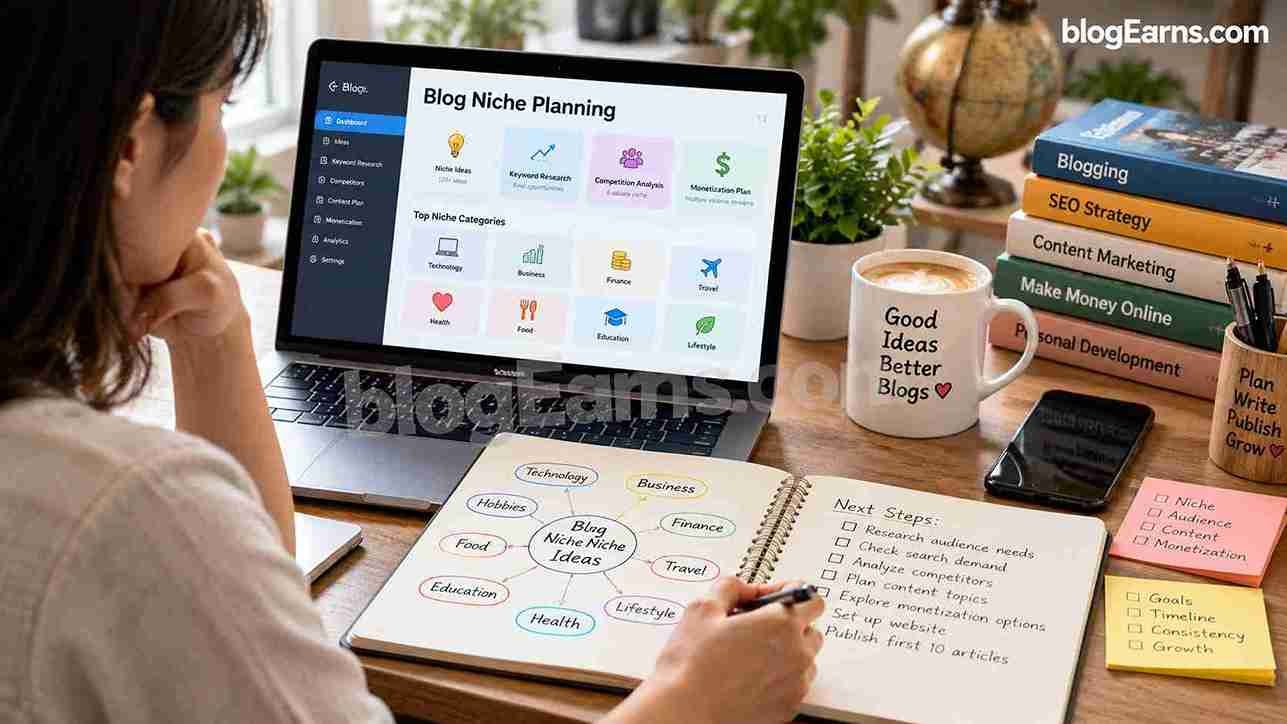
Best Blogging Niches to Start a Profitable Blog
Choosing a blogging niche is one of the most important decisions you will make when starting a website. The topic you select influences the people you attract, the articles you publish, the competitors you face, and the ways you may eventually earn revenue.
However, choosing a niche is not as simple as finding a popular subject or copying a successful website. A topic can attract plenty of attention without offering a practical business model. Another topic may have a smaller audience but serve readers with specific problems and clear reasons to purchase products, hire professionals, or invest in solutions.
The best blogging niches combine audience demand, useful content opportunities, realistic monetization options, and a subject you can cover responsibly over time.
In this guide, you will discover more than 100 blogging niche ideas across technology, business, education, finance, lifestyle, travel, hobbies, and other categories. You will also learn how to compare opportunities, narrow a broad subject into a focused niche, research competition, and validate your idea before investing heavily in a new blog.
The goal is not to find a magic niche that guarantees income. It is to identify a topic where you can build a valuable resource for a clearly defined audience.
Blogging niche selection at a glance
The following table offers a starting point for comparing broad blogging categories. These are qualitative assessments, not measured profitability rankings. Your results will depend on your audience, content quality, expertise, competition, and business model.
| Blogging category | Example audience | Potential monetization | Main consideration |
|---|---|---|---|
| WordPress and website creation | Beginners and small-business owners | Hosting affiliates, themes, services, tutorials | Requires accurate, practical technical guidance |
| Software and productivity | Professionals and businesses | Software affiliates, templates, consulting | Products and features change frequently |
| Business and entrepreneurship | Founders and small-business owners | Services, courses, lead generation | Advice must be specific and credible |
| Digital marketing and SEO | Website owners and marketers | Consulting, software, training | Competition can be intense |
| Personal finance | Savers and financially curious readers | Relevant affiliates, educational products | Accuracy and responsible communication are essential |
| Education and career | Students and job seekers | Study resources, courses, services | Official information must be verified |
| Food and cooking | Home cooks and specialized dietary audiences | Advertising, cookbooks, kitchen products | Original recipes and clear instructions matter |
| Travel | Travelers with specific budgets or interests | Affiliates, partnerships, guides | Research and content maintenance can be demanding |
| Home and gardening | Homeowners, renters, and gardeners | Products, affiliates, guides | Practical demonstrations help establish trust |
| Hobbies and creative skills | Learners and enthusiasts | Tutorials, courses, supplies | Content benefits from genuine experience |
What is a blogging niche?
A blogging niche is the subject area and audience a website consistently serves. Rather than publishing unrelated articles about every possible topic, a niche blog concentrates on a recognizable set of reader needs.
Consider these examples:
- Broad topic: Technology.
- Niche: Website creation.
- Sub-niche: WordPress website management.
- Focused positioning: WordPress tutorials for small-business owners managing their own websites.
The final example identifies both a subject and a particular audience. That makes it easier to decide what to publish, which problems to solve, and what products or services might genuinely help readers.
A niche does not have to be extremely narrow. A website can cover several related subjects if they serve the same audience and fit a coherent editorial purpose.
For example, a website for beginner bloggers could reasonably cover niche selection, WordPress setup, keyword research, content planning, and blog monetization. Those topics support the same reader journey.
By contrast, combining unrelated celebrity gossip, tax advice, gardening, and smartphone repairs on one website may make it harder to establish a clear purpose unless there is a compelling audience-based reason for doing so.
What makes a blogging niche profitable?
A profitable blogging niche is not simply a topic with high search volume. It is a subject where useful content can attract an appropriate audience and support a sustainable business model.
1. A real audience need
Start by identifying the questions, frustrations, goals, and decisions people have.
A website about home gardening, for example, could help apartment residents grow herbs in small spaces. A website about software could help freelancers choose invoicing tools. A career blog could explain interview preparation for entry-level applicants.
Specific problems give your content a clear purpose.
2. Sufficient demand
You need evidence that people are interested in the subject. Search queries are one useful source of evidence, but they are not the only one.
Explore search results, keyword research tools, community discussions, customer questions, industry publications, and relevant trend data. Look for recurring problems rather than relying on a single popular keyword.
Demand can vary by geography, season, language, and audience.
3. Realistic monetization options
Different niches support different revenue models.
A software tutorial site might earn through relevant affiliate partnerships, educational products, or implementation services. A cooking blog might monetize through advertising, cookbooks, cooking classes, or kitchen products. A specialist business blog might generate leads for consulting services.
A monetization model must fit the audience. Do not recommend products simply because an affiliate program exists.
4. Opportunities to stand out
If established websites already answer every common question thoroughly, you need a reason for readers to choose your site.
That reason could be first-hand experience, better explanations, original photographs, carefully tested methods, a specialized audience, useful tools, or a perspective missing from existing resources.
A narrower niche can help with differentiation, but it does not automatically make ranking easy.
5. Sustainable content production
Ask whether you can produce useful articles consistently without repeating the same information.
A viable niche should provide enough meaningful questions, comparisons, tutorials, and practical problems to support a coherent body of content. It should also fit your available time, budget, and skills.
6. Trust and expertise
Some topics require more care than others. Health, finance, law, cybersecurity, and other consequential subjects can affect people’s well-being, finances, rights, or safety.
You should be able to research such subjects responsibly, use credible sources, explain limitations, and obtain qualified review where appropriate. Never invent credentials or present unverified claims as professional advice.
Google’s people-first content guidance recommends original, useful, reliable content that satisfies readers rather than content created primarily to manipulate rankings.
How to choose the best blogging niche for you
Before selecting one of the ideas below, use this process to narrow your options.
Step 1: List subjects you understand. Consider your work experience, education, hobbies, practical skills, and problems you have personally learned to solve. Genuine knowledge can make it easier to create distinctive content.
Step 2: Identify a specific audience. Instead of writing for everyone interested in technology, you might serve freelancers choosing affordable software or small businesses learning WordPress.
Step 3: Collect real questions. Write down 10 to 20 questions that audience asks. Search engines, community discussions, customer reviews, and support forums can reveal useful content opportunities.
Step 4: Examine competing websites. Review the pages appearing for relevant queries. Are they comprehensive and trustworthy? Do they leave important questions unanswered? Can you offer a better explanation or a more specific solution?
Step 5: Check monetization fit. Identify several appropriate revenue models. If advertising is your only idea, investigate whether services, products, memberships, or affiliate partnerships could also fit the audience.
Step 6: Estimate the work involved. Consider the research, tools, testing, expertise, travel, photography, or product access needed to produce useful content.
Step 7: Plan a small content cluster. Outline 10 to 15 genuinely useful articles that address related questions. If you cannot identify enough meaningful topics, reconsider the scope or audience.
Step 8: Validate before scaling. Publish a carefully prepared initial group of articles, then review search impressions, engagement, reader feedback, and any meaningful conversions over time. A small test cannot guarantee future results, but it can reveal whether your assumptions need revision.
100+ blogging niche ideas organized by category

The following ideas are starting points for research, not a ranking of the most profitable niches. Each can be narrowed further based on the audience you want to serve and the problems you can solve.
1. Technology and software
- Software tutorials: Help beginners understand software features, workflows, and common errors. Monetization may include relevant software affiliates and training.
- Smartphone troubleshooting: Explain common device problems, settings, and practical fixes. Device updates and model-specific accuracy are important.
- Computer maintenance: Cover backups, storage management, operating-system settings, and troubleshooting. Potential revenue includes tools and support services.
- Cybersecurity for individuals: Explain password management, account protection, phishing awareness, and privacy tools. Accuracy is essential.
- Cloud computing for beginners: Teach cloud concepts and basic workflows. Courses and technical training may fit the audience.
- Artificial intelligence tools: Explain practical AI workflows, limitations, and tool comparisons. Rapid product changes require regular reviews.
- Data analysis tutorials: Teach spreadsheets, dashboards, SQL, and beginner analytics. Templates, courses, and consulting may be relevant.
- Productivity software: Help readers choose and use task managers, note-taking apps, and collaboration tools. Relevant software partnerships may fit.
- Open-source software: Explain installation, configuration, and use cases for open-source tools. Tutorials and professional services are possible.
- Smart-home technology: Cover device setup, compatibility, automation, and troubleshooting. Product recommendations should be carefully researched.
2. WordPress and website publishing
- WordPress tutorials: Teach website setup, editing, maintenance, and troubleshooting. Hosting, themes, plugins, and services may be relevant.
- WordPress security: Help site owners improve security, backups, access controls, and recovery plans. Technical accuracy is crucial.
- WordPress performance: Explain caching, image optimization, and performance testing. Suitable revenue models may include hosting referrals and consulting.
- WordPress themes: Compare design systems, usability, customization, and accessibility. Clearly disclose affiliate relationships where applicable.
- WordPress plugins: Explain plugin use cases, compatibility, limitations, and alternatives. Keep recommendations current.
- Website hosting for beginners: Explain hosting types, resource limits, migrations, and support quality. Hosting affiliates may be relevant.
- Website builders: Compare website creation platforms for different use cases. Explain costs, limitations, and migration considerations.
- Website accessibility: Teach practical ways to improve navigation, readability, and accessible design. Audits and consulting may be suitable.
- Website maintenance: Cover updates, backups, broken links, monitoring, and routine checks. Maintenance services may be an appropriate business model.
- Website design for small businesses: Help local businesses plan usable, clear websites. Templates, design services, and consultations may fit.
3. Business and entrepreneurship
- Small-business operations: Explain workflows, documentation, customer service, and everyday business processes.
- Freelancing: Cover client acquisition, proposals, project delivery, pricing, and client relationships.
- Remote work: Help readers build productive remote workflows and choose relevant equipment or software.
- Solopreneurship: Explain how individuals can manage marketing, operations, sales, and administration.
- Business planning: Teach market research, business-model development, budgeting, and validation.
- Ecommerce operations: Cover product listings, customer support, fulfillment, returns, and store management.
- Print-on-demand businesses: Explain product selection, design workflows, production partners, and store operations.
- Small-business customer retention: Explore customer experience, loyalty programs, service quality, and repeat purchasing.
- Business productivity: Help teams improve meetings, documentation, project management, and process efficiency.
- Local business marketing: Explain local visibility, customer reviews, service pages, and community outreach.
4. Digital marketing and SEO
- SEO for beginners: Explain crawling, indexing, search intent, content optimization, and measurement.
- Keyword research: Teach readers how to discover, classify, and evaluate search queries.
- Technical SEO: Cover crawlability, canonicalization, structured data, redirects, and website diagnostics.
- Content marketing: Explain audience research, editorial planning, content distribution, and performance measurement.
- Email marketing: Teach list building, segmentation, campaign planning, and responsible subscriber management.
- Affiliate marketing: Explain audience selection, disclosures, product evaluation, and sustainable content strategies.
- Social media marketing: Help businesses plan content, understand platform analytics, and engage relevant audiences.
- Video marketing: Cover video planning, production, optimization, and repurposing.
- Conversion optimization: Explain how to evaluate forms, landing pages, calls to action, and user journeys.
- Digital marketing analytics: Teach campaign measurement, attribution concepts, dashboards, and reporting.
5. Personal finance and financial education
- Household budgeting: Help readers organize income, expenses, savings, and financial goals.
- Saving money: Cover practical spending reviews, cost comparisons, and household savings strategies.
- Debt education: Explain repayment concepts, interest, budgeting, and questions to discuss with qualified advisers.
- Credit education: Explain credit reports, credit scores, and responsible credit use, using jurisdiction-specific sources.
- Tax education: Explain general tax concepts and official filing processes for a defined jurisdiction.
- Retirement education: Discuss retirement planning concepts, account types, and long-term considerations with appropriate qualifications.
- Financial literacy for students: Explain budgeting, banking, borrowing, and basic money management.
- Small-business bookkeeping: Teach record organization, expense tracking, reconciliations, and accounting software workflows.
- Insurance education: Explain policy terminology, coverage types, exclusions, and questions consumers should ask.
- Financial planning for life events: Cover budgeting for education, moving, family changes, or major purchases.
Finance content needs particular care. Avoid personalized investment recommendations unless appropriately qualified, and never promise returns or portray risky decisions as guaranteed ways to make money.
6. Education and career development
- English learning: Teach grammar, vocabulary, pronunciation, and practical communication.
- Language learning: Help learners develop skills in a particular language through structured lessons and practice.
- Competitive exam preparation: Explain exam formats, study planning, practice methods, and verified official updates.
- Interview preparation: Cover common interview formats, answer frameworks, and role-specific preparation.
- Resume and CV writing: Teach clear presentation of skills, accomplishments, and experience.
- Career transitions: Help readers research new occupations, skill requirements, and training options.
- Study techniques: Explain revision planning, active recall, practice testing, and time management.
- Scholarship information: Help students identify legitimate opportunities, eligibility criteria, and application requirements.
- Online learning resources: Compare courses and learning platforms based on audience needs, costs, and limitations.
- Professional certification guides: Explain eligibility, exam structure, preparation resources, and official registration processes.
For exam and scholarship blogs, verify deadlines, eligibility, fees, and official notices. Outdated information can seriously mislead readers.
7. Health, wellness, and fitness
- Beginner fitness: Explain exercise fundamentals, safe progression, and realistic training routines.
- Strength training education: Cover technique principles, training structure, and recovery using credible guidance.
- Yoga practice: Explain poses, modifications, and beginner routines, with appropriate safety advice.
- Meditation: Cover different meditation practices, habit formation, and realistic expectations.
- Healthy cooking: Share balanced meal ideas and practical preparation techniques.
- Sleep education: Explain general sleep habits and environmental factors, relying on credible health sources.
- Stress management: Discuss general coping skills and when professional support may be appropriate.
- Mobility and flexibility: Explain basic movement routines, limitations, and safe practice.
- Healthy aging: Share general wellness information for older adults using reliable sources.
- Fitness for specific activities: Develop content for walkers, runners, cyclists, or other recreational athletes.
Health-related content should be evidence-based and carefully qualified. Do not publish unsupported cures, dangerous home remedies, or medical claims that exceed the evidence.
8. Food and cooking
- Budget cooking: Help households prepare meals using affordable ingredients.
- Vegetarian recipes: Publish original recipes, cooking techniques, and meal ideas.
- Vegan cooking: Explain plant-based recipes, ingredients, substitutions, and practical planning.
- Regional cuisine: Explore the recipes, ingredients, and cooking traditions of a specific region.
- Baking: Teach bread, cakes, pastries, troubleshooting, and ingredient techniques.
- Quick meals: Develop recipes for people with limited preparation time.
- Meal preparation: Explain batch cooking, storage, planning, and food-safety considerations.
- Air-fryer recipes: Test cooking methods, quantities, timings, and equipment limitations.
- Coffee and tea: Cover brewing techniques, equipment, varieties, and tasting.
- Kitchen equipment guides: Compare cookware and appliances based on testing, usability, durability, and value.
Original recipe testing, clear measurements, preparation photographs, and practical troubleshooting can make these blogs more useful than pages that merely repeat ingredient lists.
9. Home, gardening, and practical living
- Container gardening: Help apartment residents grow herbs, vegetables, and flowers in limited spaces.
- Indoor plants: Explain lighting, watering, repotting, and common plant-care problems.
- Vegetable gardening: Cover seasonal planting, soil preparation, harvesting, and pest management.
- Home organization: Share practical storage systems and routines for different living spaces.
- DIY home projects: Explain appropriate tools, materials, planning, and project limitations.
- Small-space living: Help renters and homeowners use compact spaces efficiently.
- Home energy efficiency: Explain insulation, efficient appliances, and energy-saving practices.
- Cleaning methods: Provide material-specific cleaning guidance and safety precautions.
- Home office setup: Cover ergonomics, workspace organization, and practical equipment.
- Home maintenance: Explain routine inspections, basic upkeep, and when to call a qualified professional.
10. Travel and local exploration
- Budget travel: Help travelers compare costs, plan itineraries, and avoid common booking mistakes.
- Weekend trips: Develop practical short-trip itineraries for a defined region.
- Solo travel: Cover planning, logistics, personal safety, and destination-specific considerations.
- Family travel: Help families plan transportation, accommodation, activities, and realistic schedules.
- Accessible travel: Research accessibility features, transport options, and destination logistics.
- Local destination guides: Cover transport, attractions, facilities, and practical visitor information.
- Hiking and outdoor trips: Explain route preparation, equipment, weather, and safety.
- Travel photography: Teach composition, equipment choices, editing, and image organization.
- Travel with pets: Explain transport rules, accommodation requirements, and animal welfare considerations.
- Long-stay travel: Help readers research accommodation, connectivity, budgeting, and local practicalities.
Travel information often changes. Verify entry requirements, transport schedules, prices, opening times, and local restrictions before publishing them.
11. Parenting and family life
- Activities for young children: Share age-appropriate play, craft, and learning ideas.
- Family budgeting: Help households plan expenses, savings, and family activities.
- Parenting organization: Cover routines, household planning, and practical family systems.
- Educational activities at home: Develop reading, creative, and learning activities for children.
- Family travel planning: Help parents prepare for transport, accommodation, packing, and activities.
Respect children’s privacy, avoid exploiting personal details, and treat health and developmental claims responsibly.
12. Beauty and personal care
- Skincare education: Explain basic routines, ingredient terminology, and appropriate product use.
- Haircare: Cover hair types, styling methods, and routine maintenance.
- Makeup tutorials: Teach techniques for different occasions, skill levels, and preferences.
- Nail art: Share designs, tools, application techniques, and removal methods.
- Grooming: Cover practical grooming routines and product comparisons.
- Beauty product comparisons: Evaluate products transparently, identifying testing methods and limitations.
Avoid unsupported claims that products cure medical conditions or produce guaranteed results.
13. Fashion and lifestyle
- Capsule wardrobes: Help readers build versatile wardrobes for specific budgets and lifestyles.
- Budget fashion: Compare practical clothing options, fit, quality, and cost.
- Sustainable clothing care: Explain garment maintenance, repair, reuse, and material considerations.
- Personal style: Teach readers how to identify preferences and coordinate outfits.
- Second-hand shopping: Cover garment evaluation, sizing, condition, and responsible purchasing.
- Minimalist living: Explore practical approaches to possessions, routines, and household organization.
14. Hobbies and creative skills
- Photography tutorials: Teach camera basics, composition, lighting, and editing.
- Video editing: Explain editing workflows, software features, and production techniques.
- Drawing and illustration: Publish lessons, exercises, and project walkthroughs.
- Crafts and DIY gifts: Share original projects, materials, and instructions.
- Knitting and crochet: Teach stitches, patterns, tools, and project planning.
- Music education: Provide instrument lessons, theory explanations, and practice routines.
- Creative writing: Teach story development, revision, and writing exercises.
- Calligraphy and lettering: Cover tools, techniques, and practice projects.
- Board games: Explain rules, strategy, comparisons, and recommendations.
- Home audio: Discuss speaker placement, equipment setup, recording, and listening environments.
15. Gaming and entertainment
- Gaming tutorials: Explain game mechanics, strategies, and beginner progression.
- Gaming hardware: Compare equipment based on performance, compatibility, and intended use.
- Game development: Teach design concepts, programming, and development workflows.
- Film analysis: Examine storytelling, cinematography, themes, and filmmaking techniques.
- Book reviews: Offer original analysis and recommendations for a defined readership.
- Animation education: Explain animation principles, software workflows, and production techniques.
- Music discovery: Explore genres, artists, music history, and original commentary.
- Entertainment industry analysis: Discuss publicly documented business trends and production processes.
Use original commentary and respect copyright. Do not build a business model around copying lyrics, reproducing protected material, or republishing others’ work without permission.
16. Sports and outdoor activities
- Running for beginners: Cover training progression, equipment, and preparation.
- Cycling: Explain bicycle maintenance, equipment selection, and riding techniques.
- Cricket analysis: Discuss tactics, player performance, rules, and match analysis.
- Football tactics: Explain formations, strategy, and match analysis.
- Recreational swimming: Cover technique, training fundamentals, and appropriate safety considerations.
- Camping: Explain equipment, preparation, campsite practices, and environmental responsibility.
- Fishing education: Cover equipment, techniques, local regulations, and conservation.
- Sports equipment reviews: Evaluate gear using clear criteria and actual testing where possible.
17. Pets and animal care
- Dog training: Explain humane training methods, routines, and common behavior questions.
- Cat care: Cover enrichment, grooming, household preparation, and general welfare.
- Pet nutrition education: Explain food labels and general feeding considerations using qualified veterinary sources.
- Aquarium keeping: Cover tank setup, water quality, species compatibility, and maintenance.
- Pet travel: Explain transport preparation, animal welfare, and applicable requirements.
- Pet product comparisons: Assess practical features, safety, usability, and value.
Health and behavior problems may require veterinary or qualified professional advice. Do not present general blog content as a substitute for necessary care.
18. Sustainability and practical living
- Waste reduction: Share realistic ways to reduce household waste.
- Repair and reuse: Teach practical repair skills and responsible reuse.
- Sustainable gardening: Cover composting, water conservation, and soil care.
- Energy-conscious living: Explain household energy choices and how to evaluate potential savings.
- Second-hand purchasing: Help readers assess used goods, condition, repairability, and value.
- Low-waste household routines: Offer practical alternatives while explaining their cost and limitations.
The ideas above are not equally narrow, and some overlap intentionally with other categories. Before selecting one, define the audience and the specific problems the blog will address. A list of ideas becomes useful only when you turn it into a workable editorial plan.
Best blogging niches for beginners

The best blogging niches for beginners are not necessarily the ones with the highest commercial value. They are the ones where a new publisher can understand the audience, create useful material, and develop a realistic publishing routine.
Consider these possibilities:
| Niche | Why it may suit a beginner | Possible monetization | Main challenge |
|---|---|---|---|
| WordPress tutorials | Practical questions can be answered through demonstrations | Hosting referrals, services, educational products | Keeping technical instructions accurate |
| Budget cooking | Useful recipes solve everyday problems | Advertising, cookbooks, kitchen products | Developing original recipes and photographs |
| Language learning | Lessons can be organized by skill level | Courses, tutoring, learning resources | Standing out from established educators |
| Gardening | Content can follow practical projects and seasons | Tools, supplies, guides | Local climate and growing conditions |
| Career development | Readers have specific learning and job-search needs | Templates, courses, services | Maintaining accuracy and avoiding generic advice |
| Photography | Tutorials demonstrate skills and techniques | Equipment, presets, courses | Showing original work and practical experience |
| Home organization | Readers seek solutions for specific spaces | Products, guides, services | Producing genuinely useful examples |
| Software tutorials | Readers need help completing specific tasks | Software referrals, training, consulting | Product updates and competitive search results |
| Hobby education | Content can follow a learner’s progression | Courses, supplies, memberships | Building enough depth and consistency |
| Local travel | Destination-specific knowledge can help readers plan trips | Relevant travel referrals, guides | Keeping practical information current |
Before selecting any of these niches, look at the current search results and determine whether you can offer something distinctive. A beginner can build expertise over time but should not pretend to have experience they do not possess.
Blogging niches with multiple monetization opportunities
A blog does not need to rely on advertising alone. Depending on the audience, several revenue models may work together.
| Monetization method | How it works | Suitable examples | Important limitation |
|---|---|---|---|
| Display advertising | Ads appear alongside content | Recipes, educational guides, hobbies | Revenue depends on traffic, geography, ad demand, and other factors |
| Affiliate marketing | Earn commissions from qualifying purchases or referrals | Software tutorials, equipment guides, product comparisons | Recommendations must be relevant and properly disclosed |
| Digital products | Sell templates, guides, downloads, or tools | Budgeting, design, productivity | Products must solve a real problem |
| Courses and workshops | Teach a structured skill | Language learning, photography, software | Requires effective instruction and appropriate expertise |
| Consulting and services | Help customers solve specific problems | SEO, WordPress, business operations | Revenue depends on service delivery and available capacity |
| Lead generation | Connect potential customers with relevant providers | Local services, business software | Consent, privacy, and lead quality matter |
| Memberships | Charge for ongoing access to valuable resources | Professional education, specialist communities | Requires continuing value and audience retention |
| Sponsored content | Publish disclosed partnerships with brands | Travel, technology, lifestyle | Editorial independence and audience trust must be preserved |
| Physical products | Sell relevant goods | Crafts, gardening, cooking | Inventory, fulfillment, returns, and margins affect viability |
The right combination depends on what readers need and how they make decisions.
For example, a WordPress tutorial site might offer free troubleshooting guides, recommend relevant hosting products, sell maintenance checklists, and provide paid website support. A cooking website might publish recipes, sell a cookbook, and recommend kitchen equipment.
Neither model requires every article to sell something. Informational content can build the trust and understanding that help readers make informed decisions later.
How to compare niche opportunities
Use the following framework when evaluating your shortlist.
| Factor | Questions to investigate |
|---|---|
| Demand | Are people asking recurring questions about this topic? |
| Competition | Are existing answers comprehensive, accurate, and relevant? |
| Monetization | Can you identify suitable products, services, or other revenue models? |
| Expertise | Can you provide reliable answers or responsibly develop the necessary knowledge? |
| Content depth | Can you identify enough meaningful questions for a connected set of articles? |
| Cost | What equipment, tools, training, or research expenses will you need? |
| Differentiation | What can your website contribute that readers cannot easily find elsewhere? |
| Sustainability | Can you maintain the content and keep important information accurate? |
Do not turn these factors into a numerical profitability score unless you have a defensible scoring methodology and reliable data. A simple comparison of strengths, weaknesses, and unanswered questions is often more useful.
Blogging niches that require specialist knowledge
Some blogging subjects carry greater responsibility because inaccurate advice can affect a person’s health, finances, legal position, security, or safety.
Examples include:
- Medical conditions, treatments, and medication.
- Investment decisions, tax matters, and borrowing.
- Legal rights and regulatory requirements.
- Cybersecurity and sensitive technical operations.
- Safety-critical home repairs and equipment.
You do not necessarily need to avoid these subjects. However, you must understand the responsibilities involved.
Use authoritative sources, distinguish general educational information from professional advice, explain uncertainty, and seek qualified review when needed. Never invent credentials, testimonials, clinical evidence, financial results, or first-hand experience.
If you lack the knowledge required to explain a subject safely, choose a more suitable topic or work with a qualified specialist.
How to find low-competition blogging niches
Low-competition blogging niches can be attractive, but the phrase is often misunderstood. A niche is not automatically easy to rank for simply because it sounds unusual or has relatively few competing websites.
Competition is better evaluated at the level of specific questions and search results.
Look for underserved questions
Search for queries that a clearly defined audience might use. Review the pages that appear and assess whether they answer the question completely.
Look for:
- Important questions that are overlooked.
- Outdated instructions.
- Unclear explanations.
- Missing practical examples.
- Content that does not address a particular audience.
- Opportunities to demonstrate a process rather than merely describe it.
- Areas where first-hand experience or original research would be valuable.
A weak competitor page does not guarantee that you can rank. Search engines evaluate many signals, and another publisher may be able to improve its content too.
Evaluate demand and monetization together
A niche with little competition may also have little audience demand. Likewise, a frequently searched topic may be difficult to monetize or dominated by established publishers.
Assess both sides before committing.
Use Google Trends to explore changes in interest, keyword research tools to investigate search queries, and search results to understand the type of content people need. Treat tool estimates as estimates, not guarantees.
Narrow the audience intelligently
For example, instead of covering all software, you might focus on software workflows for freelancers. Instead of covering all gardening, you might specialize in container gardening for apartment residents.
The narrower focus provides a clearer editorial direction, but it must still support enough useful content to sustain the website.
How to validate a blogging niche before starting
Do not invest heavily in a new website just because a topic sounds profitable. Validate the idea through a structured process.
Use this checklist before committing to a niche.
BlogEarns.com · Niche Planning Tool
Validate Your Blogging Niche
Before investing your time and money, work through these 10 steps to evaluate your blogging idea.
For a WordPress tutorial site, an initial cluster might include website setup, hosting selection, essential settings, security basics, backups, troubleshooting, and maintenance. These topics support one another and address a recognizable audience.
For a gardening blog, the initial cluster could cover containers, suitable plants, watering, sunlight, soil, common problems, and seasonal care.
The point is to test whether the niche has depth, not to publish a large number of articles immediately.
Search impressions, clicks, reader feedback, engagement, and relevant conversions can provide evidence over time. New websites may need considerable time to gather meaningful data, so do not treat a short test as conclusive proof of success or failure.
How to narrow a broad niche into a focused sub-niche
A useful way to refine an idea is to combine a subject, an audience, and a problem.
| Broad topic | Focused niche | More specific positioning |
|---|---|---|
| Technology | Website creation | WordPress tutorials for small businesses |
| Finance | Budgeting | Household budgeting for early-career professionals |
| Food | Home cooking | Affordable vegetarian meals for busy households |
| Education | Career development | Interview preparation for entry-level applicants |
| Gardening | Indoor plants | Beginner plant care for apartments with limited sunlight |
| Photography | Product photography | Smartphone product photography for small online sellers |
| Travel | Budget travel | Weekend trips from a specific city |
| Business | Freelancing | Client management systems for independent designers |
The most specific option is not always the best. If you narrow the subject so much that there are very few meaningful questions, products, or opportunities to expand, you may constrain the website unnecessarily.
Choose a focus that gives readers a clear reason to visit while leaving room for related content.
Common mistakes when choosing a blogging niche
Choosing a topic only because it appears profitable
Other publishers’ success does not guarantee yours. Their results may depend on years of work, established audiences, strong brands, specialist expertise, or business relationships.
| Better approach | Research the audience and business model, then assess whether you can realistically offer something valuable. |
|---|
Choosing a topic that is too broad
A new website covering every aspect of technology, health, travel, or finance may struggle to establish a clear editorial purpose.
| Better approach | Define a primary audience and organize content around its related needs. |
|---|
Choosing a niche that is too narrow
An extremely narrow topic may have limited demand or insufficient opportunities for meaningful new content.
| Better approach | Research the range of questions readers ask and make sure the subject can support a coherent content plan. |
|---|
Confusing search volume with business potential
High search volume does not automatically mean high revenue, and low search volume does not automatically mean poor commercial potential.
| Better approach | Evaluate intent, audience needs, competition, and relevant monetization options together. |
|---|
Copying established competitors
Rewriting existing articles without adding useful information creates little reason for readers to choose your site.
| Better approach | Add original demonstrations, careful research, practical examples, better explanations, or a more appropriate focus. |
|---|
Ignoring the effort required
Some niches require regular testing, travel, specialist review, original photography, or continuous updates.
| Better approach | Estimate the work and cost before committing, and select a publishing model you can sustain. |
|---|
Expecting immediate rankings or income
Publishing a blog does not guarantee search visibility or revenue within a particular period.
| Better approach | Set realistic milestones around content quality, audience understanding, indexing, engagement, and validated business opportunities. |
|---|
Ignoring trust and legal considerations
Copied content, undisclosed commercial relationships, unverified claims, and inaccurate advice can damage readers’ trust.
| Better approach | Use original work, disclose relevant relationships, respect copyright, verify claims, and communicate limitations. |
|---|
Frequently asked questions
| 1. What are the best blogging niches for beginners? |
|---|
| The best choice depends on your knowledge, interests, audience, and resources. WordPress tutorials, cooking, language learning, gardening, photography, career development, and hobby education may be suitable starting points when you can provide useful, accurate content. |
| 2. Which blogging niches have multiple monetization options? |
| Software tutorials, website publishing, business education, cooking, photography, and specialist hobbies may support several models, including advertising, relevant affiliate partnerships, digital products, courses, or services. The available options depend on the audience and the value you provide. |
| 3. How do I choose a profitable blogging niche? |
| Identify a specific audience, research its problems, evaluate competing content, assess monetization options, and estimate the work required. Test your assumptions with a small set of useful articles before expanding. |
| 4. Can I start a blog without being an expert? |
| Yes, for many subjects you can develop knowledge as you go, provided you research carefully and represent your experience honestly. Topics involving health, finance, law, and safety may require stronger expertise, qualified review, or narrower educational coverage. |
| 5. Is a narrow niche better than a broad niche? |
| A focused niche can make audience needs and editorial priorities clearer. However, an excessively narrow niche may limit useful content opportunities. Choose a scope that is specific enough to serve a recognizable audience but broad enough to develop meaningful coverage. |
| 6. How can I find low-competition blogging niches? |
| Research specific search queries, examine the quality of current results, identify unanswered questions, and look for audiences that are not well served. Then check whether sufficient demand and suitable monetization opportunities exist. |
| 7. Can one blog cover multiple niches? |
| A blog can cover several related topics when they serve a coherent audience. For example, a website for beginner bloggers can cover WordPress, keyword research, content planning, and monetization. Unrelated subjects may be better served by separate websites if they have different audiences and purposes. |
| 8. How long does it take for a blog to gain organic traffic? |
| There is no universal timeline. Results depend on competition, site quality, content usefulness, technical accessibility, audience demand, and other factors. Monitor performance over time instead of relying on a promised ranking deadline. |
| 9. How many articles should I publish before evaluating a niche? |
| There is no fixed number. An initial cluster of 10 to 15 substantial articles can help test whether you understand the audience and can cover related questions. Meaningful conclusions may require more time and data, especially for a new website. |
| 10. Should I choose a niche based on passion or profitability? |
| Neither factor should be considered alone. Interest can help sustain your work, while audience demand and a viable business model matter for commercial goals. Look for an overlap between subjects you can cover well and problems people genuinely need help solving. |
Conclusion
The best blogging niches are not necessarily the broadest, most popular, or most frequently promoted as profitable. They are the subjects where you can serve a defined audience, create useful and distinctive content, and build a realistic business model around genuine need.
Start by identifying what you understand, researching the people you want to help, and examining the questions they ask. Compare potential niches based on demand, competition, expertise, monetization, and the effort required to produce reliable content.
Then narrow your idea into a clear editorial focus and validate it with a small collection of useful articles.
You do not need to find a perfect niche before you begin. You need a well-researched starting point, a clear audience, and a willingness to improve your content as you learn more about the people you serve.







Very useful post. Keep posting articles in this regard.
Thanks for your valuable comment.
(NO MEMBERSHIP FEE TO JOIN ILLUMINATI), I am giving a testimony on how i became rich and famous today… i was deeply strangled up by poverty and i had no body to help me, and also i searched for help from different corners but to no avail… I see people around me getting rich but to me i was so ashamed of my self so i met a man on my way he was very rich and he was a doctor so he told me something and i think over it through out the day so the next day i looked up and i keep repeating what he said to me.” if you want to get rich quick and be famous” you need to cross your heart and do what is in your mind so i tried all i could in other for me to do as he said so later on i told my fellow friend about this same thing then my friend was interested in my suggestions so i decided to look in the internet and i found a number of an agent Jackson +1(409)2993890 and we decided to contact them and fortunately we did as them instruct us to do and later, them told us to get some requirements and all the rest… so this initiation took us just a week and later on the great Illuminati gave us $7,000,000.00 to start up our lives…. and now am testifying that if in any case you want to join any great Illuminati all you need to do is for you to contact, on emial illuminatiriches50085@gmail.com or on whatsapp number +1(409)2993890.
HELLO DO YOU WANT TO JOIN OCCULT SOCIETY TO MAKE MONEY AND TO BE RICH SO THAT PEOPLE WILL RESPECT YOU AND OBEY YOU, JOIN THE GREAT ILLUMINATI BROTHERHOOD OCCULT/ YOU ARE WELCOME TO THE TEMPLE OF THE GREAT ILLUMINATI BROTHERHOOD WHERE RICHES AND WEALTH ARE BEEN GIVEN TO THE POOR!! ARE YOU DISAPPOINTED OR TIRED OF THE SITUATION YOU ARE CURRENTLY PASSING THROUGH OR NOT HAPPY BECAUSE ALL YOUR FRIENDS ARE ALREADY RICH BUT YOU ARE STILL LIVING IN POVERTY, IS YOUR BUSINESS COLLAPSING OR ALREADY COLLAPSED whatsapp Mr berry ward On WhatsApp +1(720) 803-2932 AND BE PART OF SOMETHING GREAT IN LIFE
Great article! Nice niches you presented there!