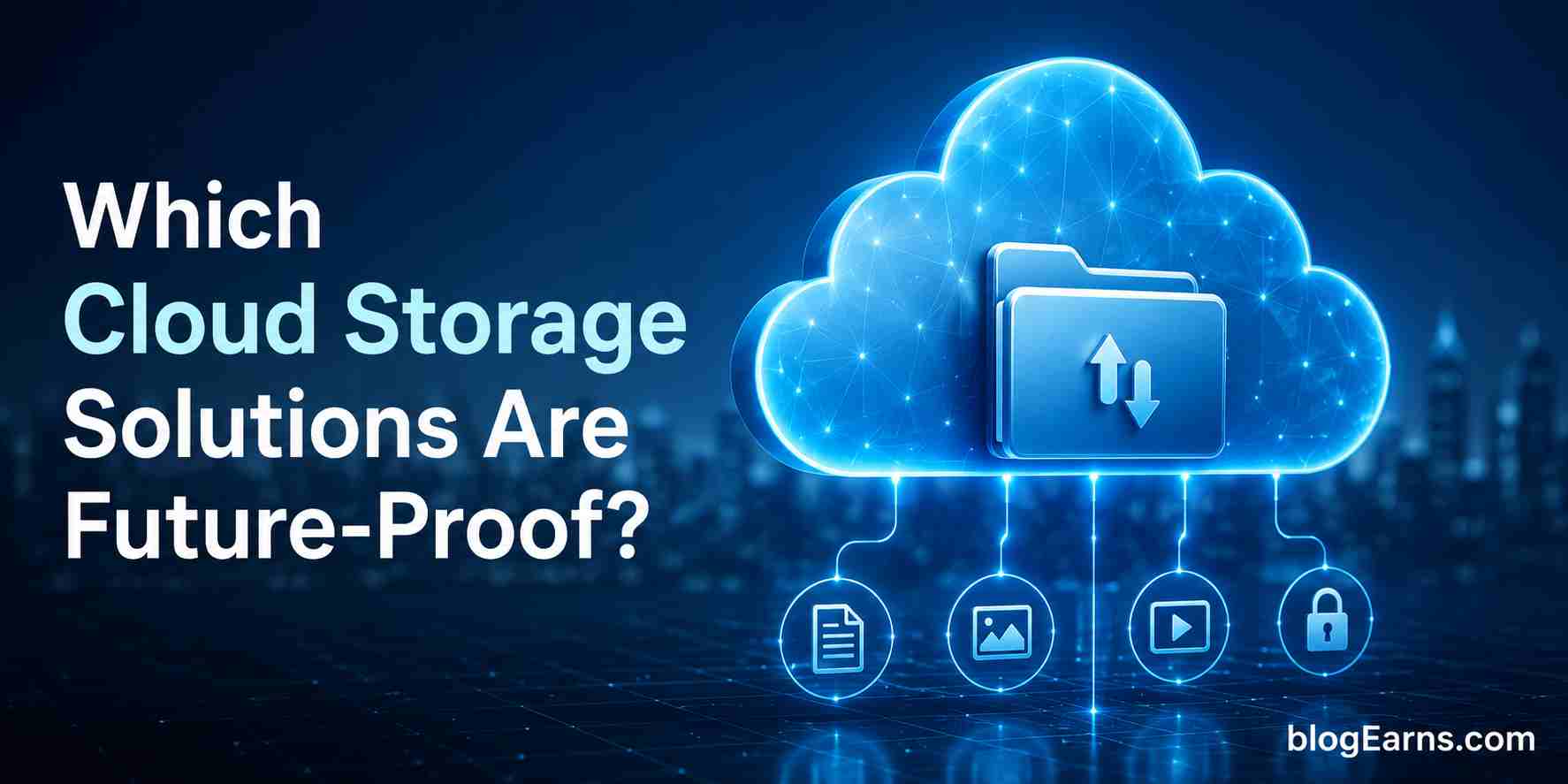
Data storage is now a strategic business choice, not just an IT decision. It directly shapes how your business adapts to evolving regulatory shifts, scales effectively when placed under intense pressure, and recovers from unexpected disruptions that could otherwise threaten continuity. Many organizations still depend on storage architectures that were designed for a different era, built around rigid hierarchies and local hardware that struggle to keep up when subjected to the demanding weight of modern workloads. The real question is which cloud approach lasts. This guide examines the warning signs that indicate outdated setups, identifies the technologies that matter most in today’s environment, and outlines the practical steps you can take to build a storage foundation that remains reliable for years to come.
Signs Your Current Storage Setup Won’t Survive the Next Five Years
Escalating Costs Without Proportional Growth
One of the clearest red flags is a storage bill that climbs faster than your actual data volume. Legacy systems often demand costly hardware upgrades, proprietary licenses, and dedicated maintenance staff. Rising costs despite modest data growth signal that your architecture is the problem. Provider lock-in amplifies this problem. You lose negotiating power and flexibility when leaving a vendor costs more than staying. Modern platforms use open standards and predictable pricing. Rising costs in proprietary ecosystems are an early warning sign worth taking seriously.
Inability to Handle Unstructured Data at Scale
Traditional file and block storage were designed for predictable, structured workloads. Yet most data created in 2026 is unstructured: video recordings, sensor logs, medical images, social media archives, and machine learning datasets. If your current system slows down, throws errors, or demands manual intervention when handling millions of small files, it is showing its age. Scalable object storage addresses this limitation by treating every piece of data as a discrete unit with rich metadata, making retrieval fast regardless of volume. Organizations that ignore this gap risk bottlenecks in analytics pipelines, delayed product launches, and mounting technical debt that becomes harder to resolve each year.
Three Core Technologies Behind Future-Proof Cloud Storage Platforms
S3-Compatible APIs and Open Standards
Standardized interfaces are the foundation of vendor neutrality. The S3 API has become the de facto standard protocol that organizations rely on for interacting with stored objects across different cloud providers, ensuring consistent access regardless of the underlying infrastructure. S3-compatible platforms allow you to switch vendors without rewriting code. This interoperability protects your investment and keeps your options open as the market changes over time.
Erasure Coding and Geo-Redundancy
Data durability is every bit as important as accessibility, since even the most readily available storage system fails its purpose if it cannot reliably preserve information over time. Erasure coding is a key data protection technique that splits data into numerous fragments and distributes them strategically across multiple nodes within a storage infrastructure. It then reconstructs the original file accurately and reliably even if several of those fragments are lost or become unavailable. This approach proves far more storage-friendly than simple replication, which typically triples the capacity requirements that organizations must meet, thereby reducing overall infrastructure costs significantly. Combined with geo-redundant distribution across separated data centers, erasure coding withstands hardware failures, natural disasters, and regional outages. Long-term-focused businesses should confirm their provider applies these techniques instead of depending only on local RAID configurations.
Automated Tiering and Intelligent Lifecycle Policies
Not every file requires the same level of access speed. Automated tiering continuously monitors how frequently files are accessed and moves data between hot, warm, and cold storage tiers based on observed usage patterns. This ensures that each dataset resides on the tier whose performance and cost characteristics best match its current level of demand. Hot data stays fast while old backups move automatically. Lifecycle policies automatically delete expired objects, move files between tiers, and enforce retention rules. Together, these capabilities lower costs and lighten the workload on IT teams, letting them focus on revenue-driving projects.
Why S3-Compatible Object Storage Outpaces Traditional Alternatives
Block and file storage still serve important roles for databases and shared network drives. However, they struggle when data volumes grow unpredictably or when thousands of applications need simultaneous access. Object-based systems scale horizontally by adding nodes, not by replacing controllers or upgrading chassis. Metadata tagging makes search and governance far simpler than navigating nested folder structures. For teams building AI training pipelines, content delivery networks, or IoT analytics platforms, the flat namespace of object-based architectures removes the directory depth limitations that slow down traditional file systems.
Data Sovereignty and Compliance as a Deciding Factor for Long-Term Storage
Regulations like the GDPR, the UK Data Protection Act, and sector-specific mandates in healthcare and finance dictate where data may physically reside and how it must be protected. A future-proof storage strategy accounts for these constraints from day one. Providers that operate data centers in clearly defined jurisdictions and offer contractual guarantees about data residency give you a compliance head start. Encryption at rest and in transit, audit logging, and granular access controls are no longer optional extras but baseline expectations. If your business serves customers in multiple countries, selecting a provider that supports region-specific storage buckets within a single management console simplifies governance considerably. Planning your content strategy around technical topics like these can also boost organic visibility. If you maintain a website, our guides on search engine optimization cover how to align technical content with ranking signals so that your expertise reaches the right audience.
A Practical Checklist for Migrating to a Resilient Cloud Storage Architecture
Moving from a legacy setup to a modern platform requires careful and thorough planning, since even minor oversights during the transition process can lead to costly disruptions that affect your operations. These steps help you avoid pitfalls during the transition:
- Audit existing data: Catalog each dataset by type, size, access frequency, and regulatory sensitivity before selecting a platform.
- Define retention and lifecycle rules: Set data retention periods, assign tiers, and encode them as automated policies.
- Test S3 API compatibility: Run applications in staging to detect authentication, permission, or performance issues early.
- Plan a phased migration: Begin with non-critical workloads, validate via checksums, then gradually expand to production data.
- Establish monitoring and alerting: Set up dashboards for latency, error rates, and cost trends so you can react before small problems become outages.
- Document and train: Create runbooks for common tasks and train all team members on bucket management.
Proper metadata tagging during migration also helps with long-term discoverability. If you need assistance generating optimized metadata for your web properties alongside your storage migration, our meta tag generation tool can speed up that process significantly.
Building Storage That Grows with You
No single product ensures permanence, but a lasting storage strategy rests on open standards, automated management, compliance controls, and horizontal scalability. Assess providers based on these criteria instead of simply pursuing the cheapest price per gigabyte. A carefully planned migration today protects you from expensive and disruptive platform changes in the future. Start with the checklist provided above, test each component rigorously under real-world conditions, and treat your storage architecture as a living system that continuously evolves alongside your shifting business goals and operational demands.
Frequently Asked Questions
Where can I test object storage performance against my specific workload requirements?
Testing storage performance requires evaluating real-world scenarios with your actual data patterns and access frequencies. IONOS provides object storage solutions that allow you to benchmark S3-compatible performance against your specific use cases. Start with a pilot deployment using representative datasets to measure throughput, latency, and cost efficiency before committing to a full migration.
What are the most common migration mistakes when switching cloud storage providers?
Organizations frequently underestimate data transfer times and costs, leading to extended downtime periods. Another critical error is failing to test application compatibility with new storage APIs before migration. Many companies also neglect to establish proper data validation processes, resulting in incomplete transfers that go unnoticed until critical files are needed.
What backup strategy works best when your primary storage is already in the cloud?
Implement a 3-2-1 backup approach even with cloud-native storage by using multiple cloud providers or regions. Maintain automated snapshots with different retention periods and consider hybrid solutions that include local backup appliances for critical data. Test restore procedures quarterly and document recovery time objectives to ensure your backup strategy actually works when needed.
How can I calculate the true total cost of ownership for cloud storage over 5 years?
Beyond basic storage fees, factor in data transfer costs, API request charges, and potential egress fees when accessing your data. Include staff training time, integration development costs, and backup storage requirements. Consider seasonal usage spikes and regulatory compliance expenses that might not be immediately obvious but significantly impact long-term budgets.
Which industries require special compliance considerations for cloud storage selection?
Healthcare organizations must ensure HIPAA compliance with encrypted data transmission and access logging. Financial services need SOC 2 Type II certifications and data residency controls for regulatory requirements. Manufacturing companies handling intellectual property should prioritize providers with strong industrial espionage protections and geographic data sovereignty options.