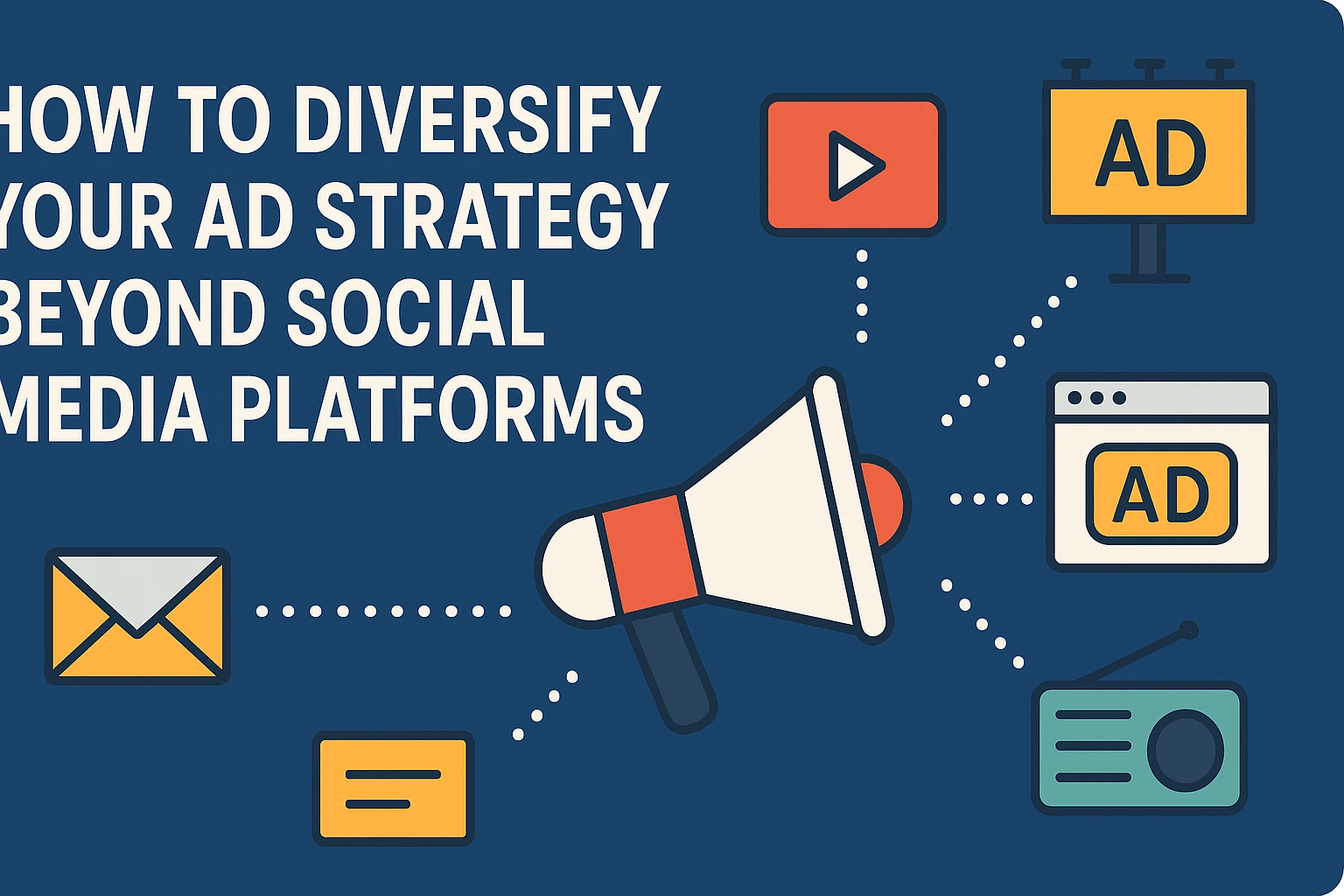
Advertising has become highly concentrated in the digital world across a few major players. Essentially, marketers have placed all their eggs in the Facebook and Google basket and without realizing it, created vulnerabilities that many businesses are just starting to see. When the algorithm changes or costs go through the roof overnight, those businesses with highly concentrated efforts scramble to find other avenues.
The good news is, outside of this bubble lies an entire ecosystem of opportunities that can help revitalize your efforts, reduce risk, and often better performance. Savvy marketers have already started using these other avenues and often find themselves generating more traffic and revenues from the audiences they tap into.
Why Concentrating Efforts Is Risky
Concentrating your advertising efforts on one or two social media platforms may seem like the easiest answer since everyone is online anyway. But it’s taking an abundance of risk in multiple ways. First, not only can your own efforts get derailed overnight based on algorithm changes (which you have no control over), but others can foil your work as well. If your ad reach is tanked by someone else’s offering, there’s nothing you can do. Furthermore, as more and more businesses try to leverage paid efforts for eyeballs, the costs keep going up. The platforms become saturated and it’s almost impossible for any one ad to have sufficient visibility.
The biggest lesson learned came when iOS privacy updates rendered Facebook’s identification and retargeting features moot and campaign performance fell off a cliff. Companies who had a backup source of traffic thrived; those who did not suffered greatly.
Display Ad Networks Are Still Effective
Consider the display advertising concept. While display may seem antiquated compared to the social media landscape, display networks can still cast a wide net effectively. Display networks place your ads on thousands of sites across the Internet for maximum exposure. These audiences are online viewing content in real time related to your industry interests.
More importantly, display networks have targeted features that have vastly improved over the last few years. Those with retargeting abilities can target users by how they’ve previously been browsing, interested, demographics, and conversion probability. This means that instead of relying on someone stumbling across your ad on social media (or a friend referral), you can bring your message and offer directly to users who may otherwise never see it, including those who spend minimal time on Google or Facebook.
PopUnder Networks Provide Options
Another option often neglected in the advertising space is popunder advertising. When marketers research what are the best popunder networks, they find value in what social media cannot give – guaranteed views. When a popunder ad runs, it’s in a new browser tab behind the current one being viewed. Therefore, as soon as the user completes their session, they’ll have the opportunity to see your offering before moving onto other interests. Popunder networks generate masses of traffic, providing incredible value for those advertisers needing scale and consistent performance across networks and verticals.
Additionally, the psychology behind a popunder works differently than one on social media; it’s not crowded by competing images and links. Instead, when the user focuses on what they’ve recently been shown, they may value what you’re giving them in its own space exponentially better than a fleeting click while scrolling through other content. As such, for various types of offers, effective engagement is far superior with popunders than social media ads for conversion potential.
Email Marketing Platforms Where You Control the Source
Email marketing to audiences and prospects provides something that social media cannot – you are getting directly to your audience without intercessors complicating efforts along the way. Therefore, by building an email newsletter list, you secure your audience connection; you can reach them through effective email marketing campaigns regardless of any changes made via the aforementioned platforms or how users engage with them.
Today’s email platforms come with various automation and segmentation features that rival their social marketing counterparts. You can craft customer journeys, test message effectiveness for results, segment effectively, and determine what’s best through various APIRs tracking viewer engagement all within analytics dashboards. On average, the return from email marketing far surpasses what most companies gain from paid social efforts.
Searching Beyond Google
Finally, platforms beyond Google exist for search marketing. Although Google is at the top of its game with search capabilities, other platforms often go ignored for more concentrated searches of various kinds. Bing and Yahoo have lower competition metrics which provide cost efficiency for certain industries and demographics when targeting users.
Generally, alternative searchers are older with higher disposable income; competition is lower, so CPC is cheaper, but placement is better for smaller businesses that get overshadowed by Google’s auction system due to size alone.
Content Marketing and SEO Generate Long-Term Assets
Unlike paid social efforts that stop delivering efforts once you’ve paused them (and especially if you’ve closed up shop), organic content marketing and SEO build assets over time that continually generate traffic and leads. This sustainable growth requires generating beneficial content that will attract an audience via keyword targeting (that has nothing to do with paid promotion). Through solid content marketing efforts, brand authority can be built while also capturing the search efforts of those actively seeking solutions offered by this type of content.
Connected TV (CTV) and Streaming Platforms
Finally, as connected TV becomes more popular than cable platforms, connected TV advertising is available for all sizes and businesses. Platforms exist for video ads to play on popular services with user-targeting capabilities as powerful as any digital offering.
This works particularly well for those companies needing video-based storytelling for their brand awareness needs or if certain demographic characteristics better suit a set market. Many users who cut cables are difficult to reach through traditional means; CTV advertising can finally score a home run.
Building Your Diversified Effort
Ultimately, the best way to diversify your advertising efforts is to understand where your target audience spends time outside of social media (which should come from analyzing your current audience). Use small budgets to test effective diversifications in other channels; start with one or two at first instead of going full-scale across multiple avenues—this allows you to learn what’s best before expanding everywhere else—and determine performance across all avenues to see what’s worth it for return on investment generally versus your specific goals.
Those who succeed in the next few years will be those that create diversified nests rather than putting everything into one basket; the alternatives are there—the work just needs to be done to properly discover them!