Two slots can pay back roughly the same percentage over the long run and still feel completely different to play. One drips out small wins every few spins, while the other goes quiet for long stretches before landing something big. The difference is casino volatility, and understanding it is one of the most practical things a slot player can learn. This guide explains what volatility means, how it differs from RTP, and how to match it to your budget and playing style.
What Is Casino Volatility?
Casino volatility (also called variance) describes how a game’s payouts are distributed over time. It answers two questions: how often does the game pay, and how large are those payments when they arrive?
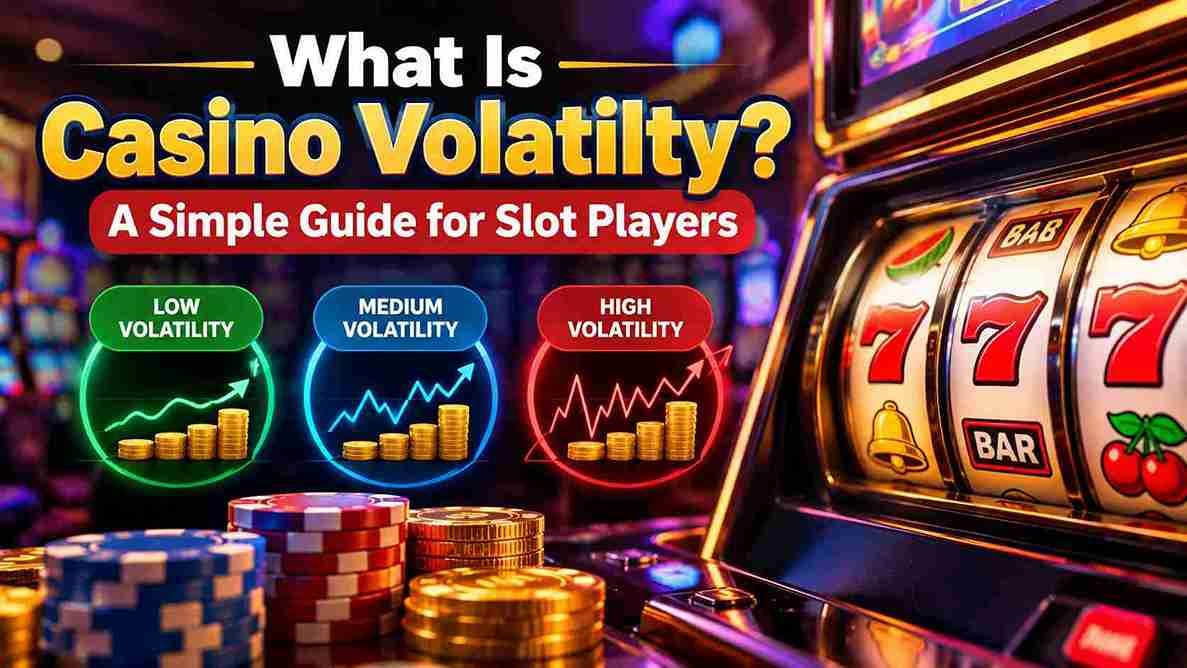
A low-volatility slot pays frequently, but the wins are usually modest. A high-volatility slot pays less often, but a single hit can be many times your stake. Medium volatility sits between the two. Volatility doesn’t tell you whether you’ll win or lose in a session; it tells you what the ride is likely to feel like.
Because slot outcomes are decided by a random number generator (RNG), every spin is independent. Volatility is simply a description of the maths built into the game’s paytable and reel design, not something that shifts based on recent results.
Casino Volatility vs RTP: What’s the Difference?
Players often mix up volatility and RTP, but they measure different things. RTP (return to player) is the percentage of all money wagered that a game is designed to pay back over a very large number of spins. A slot with 96% RTP is built to return RM96 for every RM100 wagered across millions of rounds, collectively, not per player.
Volatility describes the shape of that return. Two games with the same 96% RTP can deliver it in very different ways: one through a steady flow of small wins, the other through rare, large payouts. RTP tells you how much a game pays back on average; volatility tells you how bumpy the path is.
Low, Medium and High Volatility Slots Compared
Here is a general picture of what each level tends to look like in practice:
- Low volatility: Frequent small wins, fewer long dry spells, and a balance that moves slowly. Good for longer sessions on a modest budget, though the biggest wins are limited.
- Medium volatility: A mix of regular small wins and occasional larger payouts. A popular middle ground for players who want some excitement without extreme swings.
- High volatility: Long stretches with little or nothing, broken up by rare but potentially large wins, often from bonus rounds. Balances can drop quickly, so these games suit players with a bigger bankroll and more patience.
These are tendencies, not guarantees. Randomness means short sessions rarely match long-term averages. Online platforms such as JQK typically carry slots from several providers, so a single lobby can contain all three volatility levels side by side.
A Simple Example of Volatility in Action
Imagine two example players, each starting with RM100 and betting RM1 per spin. These numbers are purely illustrative.
Player A picks a low-volatility slot. Over 100 spins, they see wins on many spins, mostly RM0.50 to RM3 each, with their balance drifting between RM80 and RM110 for most of the session.
Player B picks a high-volatility slot. For the first 70 spins they land only a handful of small wins, and their balance falls to RM40. Then a bonus round triggers and pays RM150, pushing them well ahead. Or the bonus never comes, and the RM100 is gone before spin 100.
Both games could have identical RTP. The difference is entirely in how results are spread out, which is exactly what casino volatility describes.
How to Find a Slot’s Volatility
Players searching for jqkslot or similar slot sites will notice that not every game states its volatility clearly. Two titles with similar themes can behave very differently, so here are several ways to get a sense of it before committing real money:
- Check the game info or help screen: Many providers list volatility as low, medium or high, or show it on a scale such as 1 to 5.
- Look at the maximum win: A top prize of several thousand times your stake usually signals higher volatility.
- Study the paytable: If low-value symbols pay very little and most of the value sits in bonus features, the game is likely more volatile.
- Try demo mode: Where free play is available, a few hundred demo spins give a rough feel for how often the game pays.
Choosing the Right Volatility for Your Budget
The right level depends on your bankroll, your session length and what you enjoy. As a rough guide:
- If you have a smaller budget and want to play for longer, low or medium volatility tends to stretch your ringgit further.
- If you are chasing larger wins and accept that many sessions may end with nothing, high volatility fits that goal, but use smaller bet sizes so you can survive the dry spells.
- If you are clearing a bonus, lower-volatility games often give a steadier path through wagering, although each offer’s terms should be checked first.
One common myth is worth clearing up here: a slot is never “due” to pay after a cold streak. Each spin is independent, so a long losing run does not make the next win more likely.
Putting Casino Volatility Knowledge to Use
Once you understand casino volatility, choosing slots becomes less of a guess. Set your budget first, decide how long you want to play, then pick a volatility level that fits and size your stake so your bankroll can handle the swings. Whether you play at JQK or elsewhere, this approach helps sessions feel more controlled and less frustrating.
Online gambling is for adults 18+ only: set a budget, stick to it, and play for entertainment, not income.
Disclaimer:
blogearns.com is not an online gambling operator or a gambling site of any kind. We are simply here to provide information about sports betting for entertainment purposes only.
Although we talk about betting online on our website pages, it is the responsibility of all visitors to this website to check current local laws in their own area or country before doing any gambling online. It is your responsibility to know and follow your local laws in place.
Although we try our best to provide accurate information on blogearns.com, we cannot be held responsible for any inaccurate or incorrect information that is posted on our website pages. Please contact us if you notice any information that is inaccurate or incorrect on blogearns.com.
If you visit any website we link to from blogearns.com you have left our site. By visiting our website you confirm that you understand that it is possible to lose some or all monies used when betting on sports or doing any gambling. You cannot hold blogearns.com responsible for any such losses.
Some links on this website may be affiliate or referral links and we receive compensation from them. Some of these include but are not limited to FanDuel and FantasyDraft.
Online gambling can have potential risks and may not be legal in all jurisdictions. Please gamble responsibly and within your means.
Our site is here to provide entertainment and should be viewed as that and nothing more. Enjoy the site!